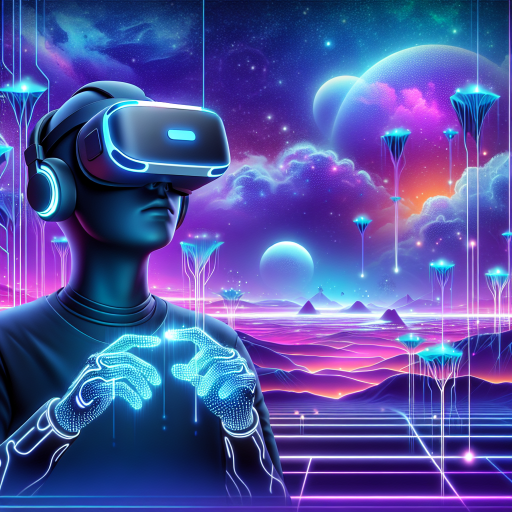
¿Qué es virtual reality?
What is Virtual Reality?
Virtual Reality (VR) is a computer-generated environment that simulates a realistic experience for users. By using specialized hardware such as VR headsets, gloves, or sensors, individuals can immerse themselves in a 3D world that responds to their movements and actions. This technology creates the sensation of being physically present in a different place, allowing users to interact with digital elements as if they were real.
VR environments are typically created using advanced graphics, sound, and other sensory inputs to make the simulation as lifelike as possible. The goal is to trick the brain into perceiving the digital world as reality. This immersion is achieved by tracking head, hand, and body movements, which update the visual and audio output in real time to match the users perspective.
Main Features of Virtual Reality
- Immersive experience: Users feel surrounded by the virtual environment, often losing awareness of the real world.
- Interactivity: Actions performed by the user, such as moving or touching objects, influence the virtual environment.
- Real-time feedback: The VR system updates visual and audio cues instantly in response to user movements.
Virtual Reality is used in various fields, including gaming, education, healthcare, and training simulations. By providing an interactive and immersive experience, VR helps users explore scenarios that may be impossible, dangerous, or expensive in real life.
¿Cuáles son los 7 tipos de realidad virtual?
What Are the 7 Types of Virtual Reality?
Virtual reality (VR) technology has evolved to offer a variety of immersive experiences. There are seven main types of virtual reality that cater to different applications and levels of user interaction. Understanding these types helps businesses and users choose the right VR solution for their needs.
List of the 7 Types of Virtual Reality
- Non-Immersive VR: Involves computer-generated environments accessed via standard screens, such as desktop simulators.
- Semi-Immersive VR: Combines physical environments with digital elements, often used in educational simulations.
- Fully Immersive VR: Provides complete immersion through VR headsets and motion tracking, creating a sense of presence.
- Collaborative VR: Allows multiple users to interact in a shared virtual space, often used for remote meetings or teamwork.
- Augmented Reality (AR): Overlays digital information on the real world, blending physical and virtual elements.
- Mixed Reality (MR): Integrates real and virtual worlds for interactive experiences where physical and digital objects coexist.
- Mobile VR: Uses smartphones and portable devices to deliver accessible and affordable VR experiences.
Each type of VR offers unique features and benefits. From basic screen-based simulations to advanced mixed reality environments, these categories highlight the versatility of virtual reality across industries like gaming, education, training, and remote collaboration.
¿Cómo activar el modo VR en mi celular?
How to Activate VR Mode on Your Mobile Phone?
Activating VR mode on your mobile phone is a straightforward process that allows you to enjoy immersive virtual reality experiences using compatible apps and VR headsets. First, ensure that your smartphone supports VR technology and that you have a VR headset, such as Google Cardboard or Samsung Gear VR, ready to use.
Steps to Enable VR Mode on Android Devices
- Open the Settings app on your phone.
- Scroll down and look for Display or Advanced features, depending on your device model.
- Select the VR Mode option and toggle it on. If you do not see this option, your phone may require a specific VR app.
For many devices, you will need to download a dedicated VR app from the Google Play Store or App Store. Popular apps like Google Cardboard or YouTube VR will prompt you to insert your phone into the VR headset and automatically switch to VR mode. Always make sure your phone’s sensors are calibrated for optimal VR performance.
¿Cuáles son los 3 tipos de realidad virtual?
What Are the 3 Types of Virtual Reality?
Virtual reality (VR) technology can be classified into three main types, each offering a unique level of immersion and interaction. Understanding these types of virtual reality helps users and developers choose the right solution for entertainment, education, or professional applications.
1. Non-Immersive Virtual Reality
- This type of VR provides a computer-generated environment that users can interact with, but they remain aware of and in control of their physical environment.
- Common examples include video games or simulation software accessed via a standard computer monitor, keyboard, and mouse.
2. Semi-Immersive Virtual Reality
- Semi-immersive VR offers a more engaging experience, often using large screens or projectors to create a sense of depth and realism.
- It is widely used in education and training, such as flight simulators or virtual labs, where users experience partial immersion while still perceiving their real surroundings.
3. Fully Immersive Virtual Reality
- Fully immersive VR delivers the most realistic experience by using head-mounted displays (HMDs), motion sensors, and sometimes haptic feedback devices.
- Users are completely surrounded by the virtual environment, often losing awareness of the real world and achieving a high level of presence and interaction.